



Bcl-2
Bcl-2 (B-cell lymphoma 2) is a central anti-apoptotic regulator that preserves mitochondrial integrity by preventing mitochondrial outer membrane permeabilization (MOMP), a critical checkpoint controlling cytochrome c release and caspase activation during intrinsic apoptosis[1][2]. Mechanistically, Bcl-2 functions through direct interactions with pro-apoptotic BCL-2 family proteins, including Bax and Bak, thereby suppressing their oligomerization and limiting mitochondrial membrane disruption[3][4]. The protein also integrates signals transmitted by BH3-only proteins, which regulate the balance between cell survival and programmed cell death under physiological and pathological stress conditions[3][5]. Dysregulated Bcl-2 expression contributes to apoptosis resistance in multiple malignancies and supports tumor cell survival by maintaining mitochondrial homeostasis despite cellular stress[6][7]. In disease models, the anti-apoptotic activity of Bcl-2 is closely linked to mitochondrial apoptosis pathways that represent major therapeutic targets in hematologic and solid cancers[6][8]. Compared with related anti-apoptotic isoforms such as Mcl-1 and Bcl-B, Bcl-2 displays broader interactions with both Bax and Bak, whereas Mcl-1 and Bcl-B show preferential regulation of Bak- and Bax-dependent apoptotic pathways, respectively[4]. For experimental applications, BH3-mimetic inhibitors disrupt the interaction between Bcl-2 and pro-apoptotic partners, thereby restoring mitochondrial apoptosis and providing a widely used strategy for mechanistic studies and targeted cancer research[7][8].
References:
- [1]. Harris MH, et al. The role of the Bcl-2 family in the regulation of outer mitochondrial membrane permeability. Cell Death Differ. 2000;7:1182-1191.
- [2]. Breckenridge DG, et al. Regulation of mitochondrial membrane permeabilization by BCL-2 family proteins and caspases. Curr Opin Cell Biol. 2004;16(6):647-652.
- [3]. Kale J, et al. BCL-2 family proteins: changing partners in the dance towards death. Cell Death Differ. 2018;25:65-80.
- [4]. Zhai D, et al. Differential regulation of Bax and Bak by anti-apoptotic Bcl-2 family proteins Bcl-B and Mcl-1. J Biol Chem. 2008 Apr 11;283(15):9580-6. [Content Brief]
- [5]. Lomonosova E, et al. BH3-only proteins in apoptosis and beyond: an overview. Oncogene. 2008 Dec;27 Suppl 1(Suppl 1):S2-19. [Content Brief]
- [6]. Danial NN. BCL-2 family proteins: critical checkpoints of apoptotic cell death. Clin Cancer Res. 2007;13(24):7254-7263.
- [7]. Akl H, et al. A dual role for the anti-apoptotic Bcl-2 protein in cancer: Mitochondria versus endoplasmic reticulum. Biochim Biophys Acta. 2014;1843(10):2240-2252.
- [8]. Kang MH, et al. Bcl-2 inhibitors: targeting mitochondrial apoptotic pathways in cancer therapy. Clin Cancer Res. 2009 Feb 15;15(4):1126-32. [Content Brief]
-
Bcl-2 Related Products (320)
Related Products (320)

-
Antibodies (6)
-
PROTAC Bcl-xL degrader-4
 0 ImagesCat. No.: HY-176740CAS No.: 2930759-37-6PROTAC Bcl-xL degrader-4 is a Bcl-xL PROTAC degrader. PROTAC Bcl-xL degrader-4 exhibits cytotoxicity against hepatocellular carcinoma cells, inhibits their migration and colony formation, and shows low cytotoxicity toward normal cells. PROTAC Bcl-xL degrader-4 induces apoptosis by reducing mitochondrial membrane potential and activating the MAPK signaling pathway. PROTAC Bcl-xL degrader-4 significantly suppresses tumor growth in xenograft tumor mouse models. PROTAC Bcl-xL degrader-4 can be used in hepatocellular carcinoma-related research.
-
Bcl-2-IN-3
 0 ImagesCat. No.: HY-136714CAS No.: 383860-03-5
-
Clorgyline hydrochloride (Standard)
 0 ImagesSynonyms: M&B 9302 hydrochloride (Standard)Clorgyline hydrochloride (Standard) (M&B 9302 hydrochloride (Standard)) is the analytical standard of Clorgyline hydrochloride (HY-14197A). This product is intended for research and analytical applications. Clorgyline hydrochloride (M&B 9302 hydrochloride) is a selective, irreversible monoamine oxidase A (MAO-A) inhibitor that can cross the blood-brain barrier and exhibits activity against the 5-HT Receptor at very high doses. Clorgyline hydrochloride regulates monoamine neurotransmitter levels, the release of dopamine and acetylcholine, the uptake and effects of Tyramine (HY-W007606), noradrenergic function, circadian locomotor activity rhythms, feeding behavior, and body weight. Clorgyline hydrochloride induces tumor-suppressive transcriptional programs, secretory differentiation, androgen signaling regulation, Bcl-2 expression, and radioprotective effects in non-malignant cells. Clorgyline hydrochloride is used in the research of high-grade prostate cancer, Huntington's disease, major affective disorder, radiation-induced normal tissue toxicity, and obesity.
-
ASO-4625
 0 ImagesCat. No.: HY-188136ASO-4625 is a 20-nucleotide gapmer antisense oligonucleotide with a full phosphorothioate backbone and 2'-O-(2-methoxy) ethyl ribose modifications, which targets BCL2 mRNA and BCL2L1 mRNA. ASO-4625 downregulates Bcl-2 expression via an RNase H-dependent antisense mechanism with 100% complementarity, and downregulates Bcl-xL expression via the same mechanism with three mismatches. ASO-4625 induces Apoptosis and acts as a chemosensitizer. ASO-4625 does not significantly modulate the expression of Bcl-W, survivin, Akt, or p53 mRNA. ASO-4625 can be used in studies of breast cancer and non-small cell lung cancer.
-
(-)BI97D6
 0 ImagesCat. No.: HY-115529CAS No.: 1430067-36-9(-)BI97D6 is a broad-spectrum inhibitor of the Bcl-2 protein family, inhibiting Mcl-1, Bcl-2, Bcl-xL and Bcl-1 with IC50 values of 0.025, 0.031, 0.076 and 0.122 μM, respectively. (-)BI97D6 stimulates cell death through the Bak and Bax mediated mitochondrial apoptosis pathway. In addition, (-)BI97D6 inhibits Mcl-1 and can effectively induce apoptosis in acute myeloid leukemia (AML) cells.
-
Longan cerebroside II
 0 ImagesCat. No.: HY-N15466CAS No.: 220873-86-9
-
Sphingosine
 0 ImagesCat. No.: HY-165550CAS No.: 134053-67-1Synonyms: C22-D-erythro-SphingosineSphingosine (C22-D-erythro-Sphingosine) is a metabolite of sphingolipid and a pro-Apoptotic signaling messenger. Sphingosine induces apoptosis via Caspase-dependent, mitochondria-dependent and lysosomal affinity detergent pathways, downregulates Bcl-2 and Bcl-xL, and truncates Bid and Bax. Sphingosine is used for cancer research.
-
BDE30671203
 0 ImagesCat. No.: HY-181030BDE30671203 is a highly selective PLK1 inhibitor (IC50 = 2.163 nM). BDE30671203 induces G2/M phase arrest and Apoptosis. BDE30671203 downregulates key cell cycle regulators (CDC20, CDK1) and the anti-apoptotic gene Bcl-2. BDE30671203 exhibits anticancer activity against non-small cell lung cancer, large cell lung cancer, and liver cancer.
-
G4232
 0 ImagesCat. No.: HY-118874HG4232 is an immune-silent BCL2 antisense oligonucleotide that binds to BCL2 mRNA to induce target degradation and inhibit Bcl-2 protein translation. G4232 carries 5'-methylcytosine in its two CpG motifs, which eliminates CpG-mediated immunostimulatory activity and does not cause significant splenomegaly or elevated plasma IL-12 levels in SCID mice. G4232 induces Apoptosis. G4232 inhibits tumor growth in a melanoma xenograft model. G4232 can be used in studies of melanoma and prostate cancer.
-
ASO-5005
 0 ImagesCat. No.: HY-188137ASO-5005 is a 20-mer Gapmer antisense oligonucleotide modified with locked nucleic acids (LNA), featuring a full phosphorothioate backbone, which targets BCL2 mRNA and BCL2L1 mRNA. ASO-5005 downregulates Bcl-2 expression via an RNase H-dependent mechanism, with its sequence fully complementary to BCL2 mRNA; it simultaneously downregulates Bcl-xL expression via an RNase H-dependent mechanism, with three mismatches between its sequence and BCL2L1 mRNA, while LNA modification enhances its activity against this mismatched target. ASO-5005 induces Apoptosis by activating Caspase-3 and cleaving ICAD. ASO-5005 does not significantly regulate the expression of Bcl-W, Survivin, Akt, or p53 in tumor cells. ASO-5005 can be used for research on breast cancer and non-small cell lung cancer.
-
Nivitol
 0 ImagesCat. No.: HY-108046CAS No.: 869743-37-3Synonyms: UP302Nivitol (UP302) is a natural phenolic compound discovered from Dianella ensifolia and also acts as a Tyrosinase inhibitor. Nivitol competitively and reversibly inhibits tyrosinase, suppressing melanin production. Nivitol inhibits homogentisate 1,2-dioxygenase (HGD). In human leukemia cells, Nivitol inhibits PI3K/AKT pathway phosphorylation, increases ROS, decreases mitochondrial membrane potential, and induces G2/M cell cycle arrest, apoptosis, and PINK1/Parkin-mediated mitophagy. Nivitol exhibits inhibition of tumor growth in the MV411 xenograft mouse model. Nivitol is used for research on exogenous ochronosis, hyperpigmentation, and leukemia.
-
Sorafenib tosylate (Standard)
 0 ImagesSynonyms: Bay 43-9006 tosylate (Standard)Sorafenib (tosylate) (Standard) (Bay 43-9006 (tosylate) (Standard)) is the analytical standard of Sorafenib (tosylate) (HY-10201A). This product is intended for research and analytical applications. Sorafenib (Bay 43-9006) tosylate is a potent oral active multikinase inhibitor. Sorafenib blocks autophosphorylation and activity of receptor tyrosine kinases (VEGFR-2, VEGFR-3) and RAF family kinases, thereby suppressing the RAF/MEK/ERK and PI3K/Akt pathways, inhibiting STAT3 phosphorylation, and selectively inhibiting the MAPK pathway in cancer cells. Sorafenib tosylate induces cell cycle arrest, autophagy, apoptosis, and PARP cleavage, reduces Bcl-2, Bcl-XL, cyclin D1 levels, and activates Bak and Bax. Sorafenib tosylate inhibits tumor growth and metastasis in mouse and rat models. Sorafenib tosylate can be used for cancer research, such as colon, breast, non-small-cell lung cancer (NSCLC), ovarian, pancreatic, melanoma, colorectal and hepatocellular carcinoma.
-
FLLL12
 0 ImagesCat. No.: HY-183402CAS No.: 917813-60-6Synonyms: GO-Y026FLLL12 (GO-Y026) is a curcumin analog anticancer agent. FLLL12 inhibits the phosphorylation of AKT, Bcl-2, Bid, EGFR, mTOR, FOXO1a, FOXO3a, STAT3, HER2/neu, as well as pancreatic AKT/STAT3; upregulates the expression of Bim and DR5; and activates PTPs. FLLL12 regulates downstream pathways, induces mitochondria-mediated and DR5-dependent extrinsic apoptosis, inhibits cancer cell viability, proliferation, anchorage-independent growth and migration, and exerts a synergistic effect with Doxorubicin (HY-15142A). FLLL12 can be used in research related to head and neck squamous cell carcinoma, breast cancer, prostate cancer, pancreatic cancer, lung cancer, colon cancer and colorectal cancer.
-
Rhodomyrtosone D
 0 ImagesCat. No.: HY-N19904CAS No.: 1079988-19-4Rhodomyrtosone D is a natural α-glucosidase and BCL-2 inhibitor. Rhodomyrtosone D exhibits an IC50 of 110.45 μg/mL against α-glucosidase derived from Saccharomyces cerevisiae. Rhodomyrtosone D interferes with carbohydrate digestion, interacts with specific BCL-2 amino acid residues, and reduces postprandial blood glucose levels. Rhodomyrtosone D can be used in the research of diabetes and breast cancer.
-
Vanillyl alcohol (Standard)
 0 ImagesVanillyl alcohol (Standard) is the analytical standard of Vanillyl alcohol (HY-N2067). This product is intended for research and analytical applications. Vanillyl alcohol (p-(Hydroxymethyl)guaiacol) is an orally active phenolic alcohol. Vanillyl alcohol reduces ROS generation. suppresses Bax, increases Bcl-2. Vanillyl alcohol has anti-angiogenic, anti-inflammatory, anti-nociceptive and neuroprotective effects. Vanillyl alcohol is used as a flavoring agent in foods and beverages.
-
F16 (Standard)
 0 ImagesCat. No.: HY-100395RCAS No.: 36098-33-6F16 (Standard) is the analytical standard of F16 (HY-100395). This product is intended for research and analytical applications. F16 is a mitochondrial permeability transition pore (PTP) modulator with an EC50 of 30 μM in mice. F16 promotes PTP opening, accumulates in cancer cell mitochondria, and induces mitochondrial depolarization, swelling, cristae disruption, outer membrane rupture, ATP depletion, reactive oxygen species (ROS) production, cytochrome c release and mitochondrial uncoupling. F16 induces cell cycle arrest at the G1 (occasionally G2) phase, reduces the phosphotyrosine content of Neu, as well as the levels of phosphorylated PKB/Akt and phosphorylated MAP kinase, downregulates the protein expression levels of Neu and PKB, triggers apoptosis in cells with moderate Bcl-2 expression, and induces necrosis in cells with overexpressed Bcl-2. F16 can be used in research related to breast cancer and gastric cancer.
-
Liguzinediol
 0 ImagesCat. No.: HY-121864CAS No.: 909708-65-2Liguzinediol is a Bcl-2 upregulator that exerts cardioprotective effects by upregulating Bcl-2, downregulating Bax and cleaved caspase-3, and inhibiting myocardial apoptosis, RAAS, oxidative stress, inflammation, and extracellular matrix remodeling. Liguzinediol can be used for research on heart failure and cardiac fibrosis.

-
3-Methylxanthine-d3
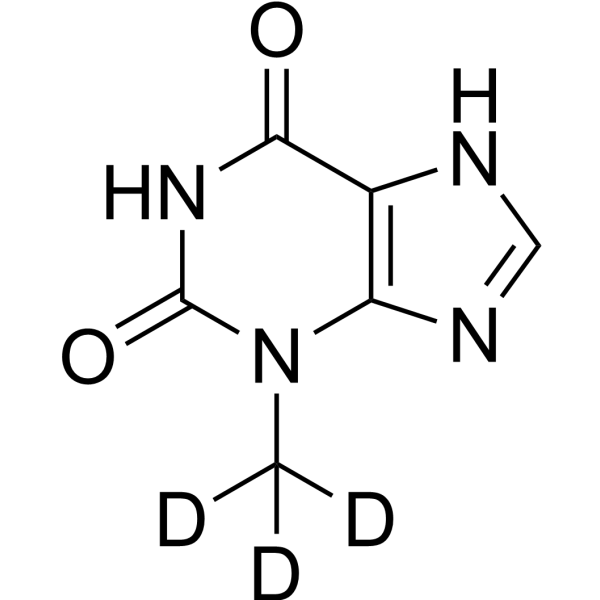 0 ImagesCat. No.: HY-50723S1Purity: 99.61%3-Methylxanthine-d3 is deuterated labeled 3-Methylxanthine (HY-50723). 3-Methylxanthine is a blood-brain barrier-permeable cyclic GMP phosphodiesterase inhibitor, with an IC50 of 920 μM against guinea pig cyclic GMP phosphodiesterase. 3-Methylxanthine relaxes the spontaneous tension of isolated guinea pig tracheal smooth muscle preparations. Through a DRD1-dependent pathway, 3-Methylxanthine upregulates the expression of γH2AX and activated caspase-3, downregulates the expression of Bcl-2, and enhances Cisplatin-induced apoptosis (apoptosis) in ovarian cancer cells both in vitro and in vivo. 3-Methylxanthine induces clonic convulsions in the central nervous system. 3-Methylxanthine is the major metabolite of Theophylline (HY-B0809). 3-Methylxanthine can be used in studies related to ovarian cancer and neurotoxic convulsions.
-
Lig4-4
 0 ImagesCat. No.: HY-W269032CAS No.: 3598-68-3Lig4-4 is an orally active and selective TREK-1 inhibitor, with an IC50 of 2.06 μM in rats. Lig4-4 improves neuronal viability, reduces cell apoptosis by upregulating cleaved-caspase-3 and downregulating Bcl-2, and decreases infarct volume. Lig4-4 exerts a neuroprotective effect against cerebral ischemia injury. Lig4-4 can be used in studies related to cerebral ischemia.




